
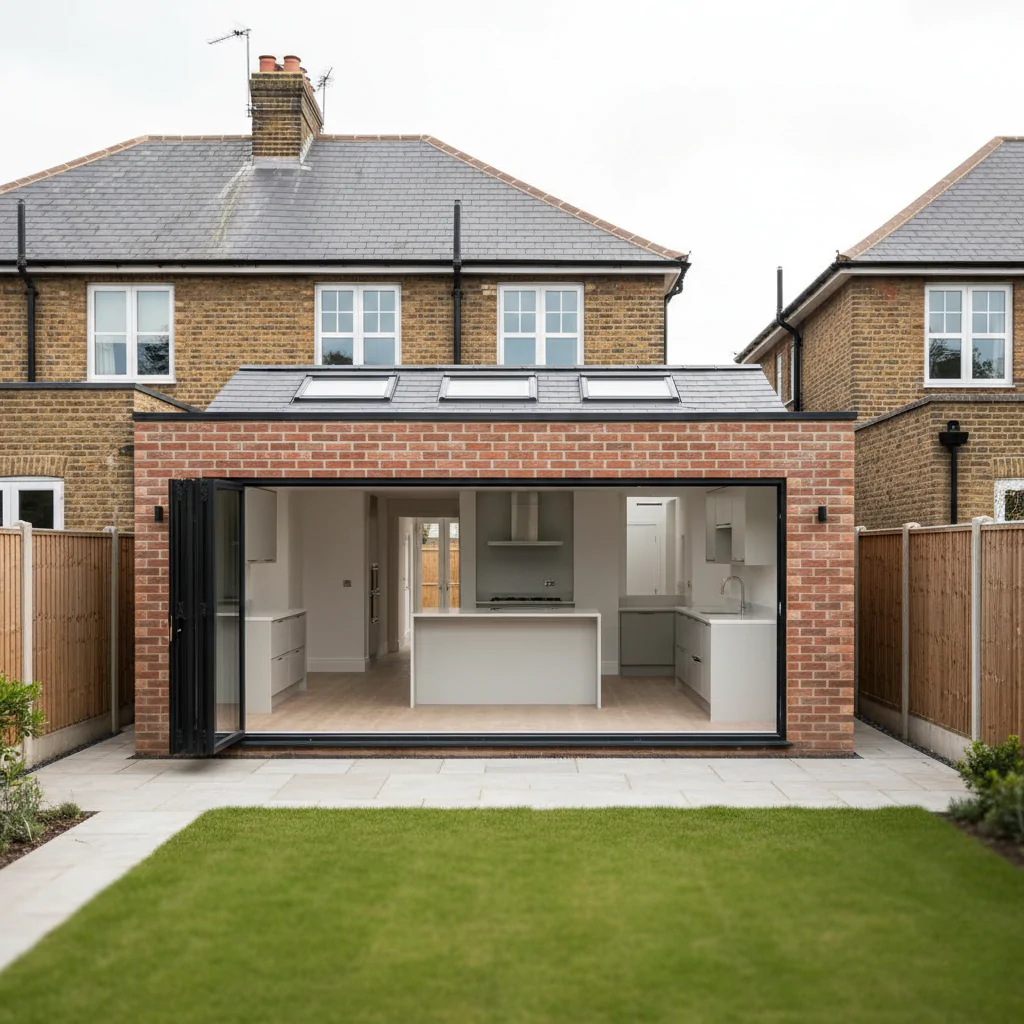
Steel Beam for Extension: A Clear Guide for UK Homeowners (2026)
A steel beam is often the main structural part of a home extension. It holds up the load when you open a wall or create a bigger space. If you are planning an extension in the UK, you will almost always need at least one steel beam for extension support. This guide explains everything in simple language so you know what your builder and engineer are talking about.
What Is a Steel Beam in an Extension?
A steel beam carries the weight of floors, walls or the roof when you change or remove a supporting wall. Builders often call it an RSJ, UB, or steel beam extension support. All three mean the same thing: a strong rolled steel section that sits above the opening.
Why steel beams are used
- They are strong and compact.
- They can span long distances.
- They keep the extension safe and stable.
Without the correct beam, the structure could sag or crack.
Types of Steel Beams Used in Home Extensions
Universal Beams (UBs)
The most common choice. Narrow and strong. Ideal for most house extensions.
Universal Columns (UCs)
Shorter and deeper. Used when the load is heavy or when the bearing area is small.
Twin beams (bolted together)
Used when one beam is not enough or when you need to reduce head height.
Flitch beams
A timber–steel–timber sandwich. Less common today but used when full steel is awkward.
When you see search terms like extension steel beam, steel beam house extension, or steel beam extension, these all refer to the same idea: a structural steel support that keeps the house safe.
When a Home Extension Needs a Steel Beam
Most extensions need one or more beams when you:
- Undertake a load bearing wall removal
- Build a large open-plan kitchen
- Add bi-fold or sliding doors
- Extend the rear or side of the house
- Add a first-floor extension above a ground-floor room
- Remove chimney breasts as part of the new layout
If the new opening is wider than 1 metre, a steel beam is almost always required.
Calculating Steel Beam Size for a Home Extension
One of the most common questions homeowners ask: "how do I work out what size steel beam I need for my extension?" The answer is always the same — a structural engineer calculates it. Here is exactly what that calculation involves.
The three factors that determine beam size
- Span — the clear distance the beam must bridge between its supports.
- Load — the weight above the beam: floors, roof, walls, finishes and occupants.
- Support conditions — what the beam ends sit on, how stiff the walls are, and whether there are point loads from other beams above.
What the engineer calculates
- Bending moment check — ensures the beam does not snap under the applied load.
- Shear check — ensures the beam ends can resist the vertical force without failing.
- Deflection check — limits how much the beam sags (typically span/360 maximum) to prevent cracked plaster and sticking doors.
- Bearing check — confirms the padstones and wall below can carry the concentrated load at the beam end.
Example: calculating a beam for a 4m kitchen opening
A typical 1930s semi-detached house, removing the ground floor wall between kitchen and dining room to create a 4m opening. Two floor joists from the bedroom above bear onto the wall being removed, plus the roof loads from a single-pitched roof over the kitchen extension.
- Span: 4.0 m clear
- Dead load: 3.5 kN/m² (floor finishes + ceiling)
- Imposed load: 1.5 kN/m² (occupancy)
- Resulting beam: typically a 203×133×30 UB in S275 steel
- Utilisation at mid-span: approximately 0.82 — safely within capacity
These figures are illustrative only. Your calculation will differ based on your spans and loads.
Extension Beam Calculation: What the Engineer Checks
An extension beam calculation is not just sizing the steel section. Here is the complete picture of what a properly produced structural calculation pack includes for a home extension beam.
Load takedown
The engineer works down from the roof, counting every load that eventually bears onto the beam. Roof dead load (tiles, insulation, felt), roof imposed load (snow), floor dead load (screed, joists, boards, ceiling) and floor imposed load (people and furniture) are all added together and expressed as a load per unit length on the beam.
Beam section selection
Using the total load and the span, the engineer selects the minimum beam section that passes all three checks: bending, shear and deflection. For most domestic extension beams, this is a Universal Beam (UB) from the standard UK section range.
Padstone design
The concentrated load at each beam end must be spread safely into the wall below. The engineer calculates the required padstone size and specifies whether a standard precast concrete padstone is sufficient or whether a reinforced concrete padstone is needed. Inadequate padstones lead to local crushing of the brickwork — one of the most common failures in DIY or builder-guessed installations.
What Building Control receives
The full extension beam calculation pack contains:
- Load takedown summary
- Beam section check to BS EN 1993 (Eurocode 3)
- Deflection check result
- Padstone design
- Structural drawing showing beam position, padstone dimensions and connection details
Fees for extension beam calculations start from £245 for a single beam and £450–£750 for a full extension structural pack. See our extension structural design page for full details.
How a Structural Engineer Designs Your Steel Beam
A structural engineer works out the beam size, loading, bearing, padstones and connections. This is needed for Building Control approval.
What the engineer checks
- Weight from walls, floors or roof
- Span length
- Type of existing construction
- Wind load or roof spread
- How the beam connects to other beams or walls
- Bearing capacity of the walls
This is where you will see terms like steel beam calculation, structural steel check, or extension beam calculation.
Why calculations matter
Without correct calculations, the beam might deflect, cracks can form, doors and windows may jam, and Building Control will not approve the job. These problems cost more to fix than getting it right at the start.
Typical Steel Beam Sizes for Extensions
Every house is different, but these are common examples builders see:
- 152×89 UB for small openings
- 178×102 UB for standard kitchen knock-throughs
- 203×133 UB for medium spans
- 254×146 UB for large openings with heavy loads
- 305×165 UB for double-storey or long spans
These are examples only. Your RSJ design must be properly calculated, not guessed.
Padstones and Bearings Explained
The steel beam needs a solid base to sit on. That base is called a bearing. A padstone spreads the load safely into the wall and down to the footings for extension stability.
Common padstone sizes
- 440×215×100 mm
- 440×215×140 mm
- Larger sizes for heavy loads
If the wall is weak or made of old brick, the engineer may specify a reinforced concrete padstone.
Steel Beam Connections and Bolts
Sometimes two beams cross or sit on top of each other. This is common in wrap-around extensions. The connection between beams must be designed so that loads transfer safely and the beams do not twist or shift over time.
Connection types
- End plates — bolted face-to-face between two beam webs
- Web cleats — angle brackets bolted to the beam web
- Bolted fin plates — used when beams cross at right angles
- Flitch plate bolts — used in flitch beam assemblies
A good connection design keeps the steel rigid and prevents twisting under load. All connections in a Building Control submission must be specified and checked by the engineer.
Steel Beam Installation Cost for a Home Extension
The total cost of installing a steel beam in a home extension has three components: supply of the steel, structural engineer calculations, and builder labour. Here is a full breakdown for 2026.
Steel beam supply cost (2026)
| Span | Typical Beam Size | Supply Cost |
|---|---|---|
| 2–3 m | Small UB | £180–£260 |
| 4–5 m | Medium UB | £260–£450 |
| 5–6 m | Heavy UB | £450–£800 |
| 6–7 m | Extra heavy UB | £800–£1,400 |
Structural calculation fees
- Single beam calculation: £245–£350
- Multiple beams or full extension pack: £450–£750
- Complex layouts (goalpost frames, multiple openings): £700–£1,200
Builder labour for beam installation
- Standard single beam (propping, removal, install, padstones): £800–£1,500
- Large or heavy beam (crane or hoist required): £1,500–£2,500
- Goalpost frame with columns: £2,000–£4,000
Additional costs to allow for
- Padstones (supply): £60–£200
- Acrow props hire: £80–£200 per week
- Skip hire for masonry: £200–£350
- Fire-rated plasterboard boxing: £150–£400
- Building Control fee: £200–£500
For a broader picture of the full extension project budget, see our single storey extension cost guide.
Building Control Requirements
Building Control must approve all structural steelwork. They check:
- Beam calculations
- Correct size and grade
- Proper bearings
- Fire protection
- Stability of the overall structure
If something is missing, they can stop the job until it is fixed. For official standards, you can check the Planning Portal.
Fire protection
Steel beams must be painted with intumescent paint or wrapped in fire-rated plasterboard. This gives the beam enough time to resist fire.
Common Mistakes Builders Make
Using a guessed beam size
This is the most common problem. Guesswork can lead to failures.
No padstone
A beam on bare brick can crush the wall.
Wrong bearing length
Minimum safe bearing is normally 100 mm or more.
Cutting into joists
Joists must connect safely with joist hangers or timber plates.
No lateral restraint
Beams need restraint to stop twisting.
How to Make Your Extension Structurally Strong
A good extension follows three simple steps:
Step 1 – Hire a structural engineer
They design the beams and ensure all loads are supported. Always ensure you choose a qualified structural engineer for extension projects.
Step 2 – Let the builder follow the structural drawings
No changes should be made on site without checking.
Step 3 – Get Building Control sign-off
This protects you if you sell your home later.
FAQ About Steel Beams for Extensions
Do I need a steel beam for every wall I remove?
If the wall is load bearing, yes. A structural engineer will confirm.
How long does it take to install a beam?
Most beams take one day to install.
Can a steel beam rust?
Inside a house, rust is rare. Fire protection and plasterboard keep it dry.
Can I open two walls at once?
Yes, but you may need multiple beams or a goalpost frame.
Areas We Work In
We design steel beams for extensions, wall removals and loft conversions for clients across England. If you prefer to speak to someone who knows your local area, you can start with one of our city pages:
- Structural Engineer London
- Structural Engineer Manchester
- Structural Engineer Birmingham
- Structural Engineer Bristol
- Structural Engineer Leeds
- Structural Engineer Liverpool
- Structural Engineer Nottingham
For other locations, you can also start from our main site SECalcs home page or send drawings direct through our contact form.
Conclusion
A steel beam for extension is one of the most important structural parts of any home improvement project. With the right engineer, correct beam size and proper Building Control checks, your extension will be safe, strong and long-lasting.