
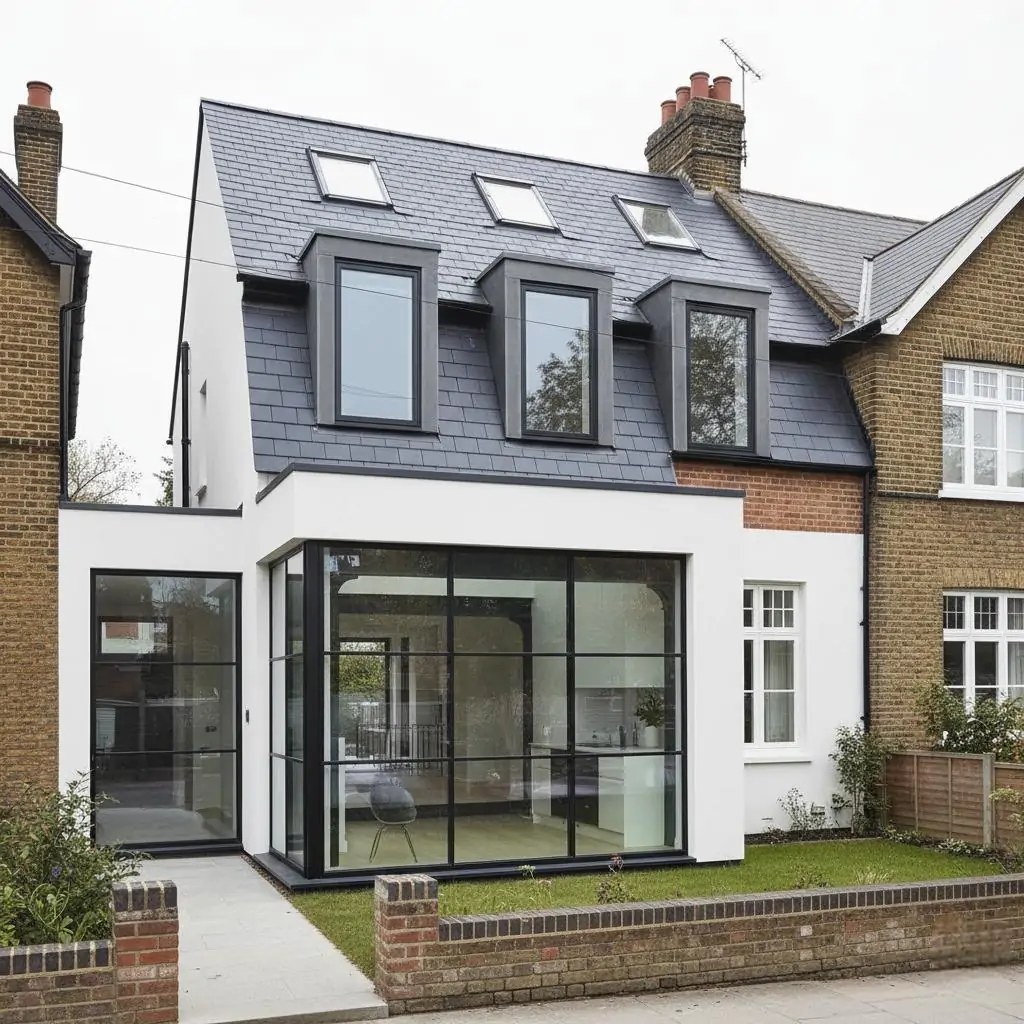
Loft conversion steel beams: simple guide for UK homeowners
If you are planning a loft conversion, you have probably been told you will "need an RSJ" or "a couple of steels in the loft".
This guide explains loft conversion steel beams in plain English.
You will learn:
- What the beams actually do
- When you need them and what types are used
- Rough costs and how a structural engineer works it all out
By the end, you will know what to expect before you ask for quotes.
What are loft conversion steel beams?
In a typical loft conversion, steel beams:
- Carry the new floor so it does not overload the existing ceiling joists
- Hold up the altered roof where rafters are cut for a dormer or rooflight
- Transfer loads safely into the walls down to the footings for extension
Most beams are universal beams (UBs) or universal columns (UCs) in rolled steel. Many people still call them RSJs (rolled steel joists). The shape does not matter to you as a homeowner. What matters is that the beam is:
- The right size
- Sitting on proper bearings and padstones
- Designed and checked by a qualified structural engineer
In a finished loft room you rarely see the beams. They sit hidden in the floor zone or inside the roof framing while your plasterboard, insulation and finishes cover them.
Do you always need steel beams for a loft conversion?
Short answer: almost always, if you want a proper habitable room.
Building Regulations in the UK require the structure to support the new loads safely, with limits on movement and strength. That comes under Approved Document A: Structure.
Three common cases:
Traditional cut roof, simple conversion
Sometimes you can strengthen existing timbers with new joists and trimmers. But you still often need at least one loft conversion steel beam to pick up floor loads or a new stair opening.
Trussed rafter roof
These roofs were never designed to be cut. Converting them almost always needs a full new steel frame to replace the strength of the trusses.
Dormer or hip to gable loft
You are cutting away a large part of the roof. You will usually need a ridge beam and several floor beams, all in steel.
There are rare cases where a very small storage-only conversion uses timber only, but if you want a bedroom or office, expect steel beams to be part of the design.
Main types of steel beams used in loft conversions
Floor and trimming beams
These are the workhorses of most loft conversions. They:
- Span across the house, sitting on the supporting walls
- Carry new floor joists which hang from the beam with joist hangers
- Often form the edges around stair openings or chimney recesses
They are sometimes called primary beams, trimmers or spine beams. These are the same Universal Beams (UBs) widely used as steel beams for home extensions on ground floors too.
Ridge beams
Where the old roof relied on rafters leaning against each other, a loft conversion often replaces that with a steel ridge beam.
The ridge beam:
- Runs along the top of the loft
- Supports new rafters or stud walls below the roof
- Allows old internal supports to be removed to create open space
Ridge beams are common in dormer and hip to gable loft conversions.
Dormer and purlin beams
Dormer walls and new roof openings often need shorter secondary beams to pick up the top of dormer walls, carry purlins and form lintels over wide windows. These are essential for most dormer loft conversion options.
Flitch beams
A flitch beam is a sandwich of timber each side with a steel plate in the middle, bolted together. Handy where you want the slimness of steel but prefer a timber look — for example over a stair opening that stays partly visible.
Loft conversion steelwork: the full structural package
Loft conversion steelwork refers to the complete set of steel elements needed across the whole conversion — not just a single beam. Understanding what the steelwork package involves helps you budget accurately and have better conversations with your builder and engineer.
What loft conversion steelwork typically includes
- Primary floor beams — the main spanning beams that carry the new loft floor
- Ridge beam — the steel that runs along the roof apex and replaces the original ridge/purlin support
- Trimmer beams — short beams that frame the stair opening, chimney recess or large rooflight
- Steel posts or columns — where beams need support mid-span and a wall is not available
- Dormer steelwork — beams at the head of dormer walls and over wide dormer windows
Steelwork for different loft types
Rear dormer on a terraced house — typically 2 primary floor beams + 1 ridge beam + 1–2 trimmers around the stair. The simplest steelwork package.
Hip to gable loft conversion — 3+ primary beams + ridge beam + gable wall steelwork + dormer beams. More complex because the hip end of the roof is rebuilt.
Trussed rafter loft — all trusses must be replaced. Usually a full steel goalpost or frame at each end plus beams at both floor and roof level. The most involved steelwork package.
Getting the steelwork designed
Your structural engineer will review your roof type, spans, wall construction and the proposed layout before designing the steelwork. You can get a fixed-fee quote for loft conversion steelwork design — most standard jobs are £395 to £900 for the engineer's design fee, delivered within 5 to 7 working days.
How engineers size steel beams for your loft
Homeowners often ask: "What size steel beams do I need for a loft conversion?" and "How many steel beams will my loft conversion need?" There is no single standard answer, but the process is always similar. For a detailed look, see our steel beam calculation page.
Three key things that decide beam size
- Span: The clear distance between the supports, wall to wall or beam to beam.
- Loads: Weight of the new floor, roof, walls, finishes and people.
- Support conditions: What the beam sits on, how stiff the walls are, and whether there are point loads from dormers or other beams.
The engineer then runs calculations to check bending strength, shear strength, and deflection. All this is done to current UK standards (Eurocodes and Building Regulations) so Building Control can sign it off.
How many steel beams your loft might need
Simple rear dormer on a terraced house
- 2 primary floor beams
- 1 ridge beam
- 1 or 2 shorter beams around the stair
Hip to gable loft conversion with full-width dormer
- 3 or more primary beams
- 1 ridge beam
- Several short beams/purlins for openings and dormer supports
Trussed rafter loft
- A full steel goalpost or frame
- Multiple beams at floor and roof level
Example loft beam layout in plain English
Imagine a typical 1930s semi: two main floor beams run from front to back, sitting on the party wall and the outer wall. New floor joists span sideways between these beams at about 400 mm centres. A ridge beam runs along the top of the roof, supported on the gable wall and internal steel posts. Short trimmer beams frame round the new stair and any large rooflight.
From your point of view, the existing ceiling is left in place while the new structure is built above. Loads go safely into the existing walls and foundations, rather than into thin old ceiling joists.
How loft conversion steel beams are installed on site
Preparation and temporary support
Before any beam goes in, the builder will strip back roof coverings and finishes in the working area, put in temporary Acrow props under existing rafters or ceilings, and form openings in the brickwork for the new beam bearings and padstones. This stage is noisy and dusty but usually only lasts a day or two.
Lifting, seating and fixing the steel
Steel beams are lifted into the loft using genie lifts, manual handling or a crane depending on size and access. They are slid into position, set down on padstones or steel plates, and fixed with bolts, straps and joist hangers. Once the beams are in place, the new floor joists and stud walls are built off them and the props are removed.
Making the structure ready for Building Control
The builder will call Building Control to inspect the steelwork before it is covered. You should keep copies of your structural calculations, marked-up drawings and Building Control completion certificate — these matter when you sell or remortgage.
Building Regulations, Building Control and safety checks
For a loft conversion in England and Wales you will usually need Building Regulations approval for structure, fire, insulation, stairs and more. Structural design must comply with Approved Document A (Structure). The Planning Portal has a clear summary of loft conversion rules and limits.
Your structural engineer designs the beams so that loads are carried safely, movements are within limits, and details are buildable for your contractor. Planning permission is sometimes not needed under permitted development, but Building Regulations almost always apply.
Loft conversion steel beams cost (2026)
Costs vary by region, access and complexity. Current guides suggest:
Steel supply only
Roughly £40–£100 per metre depending on size and supplier. A single 3–6 m RSJ might be £150–£600. See our RSJ design guide for specifics.
Supply and installation for one RSJ
Typical all-in range £1,000–£2,000+ for a load bearing wall removal or similar span.
Loft conversion steel package
For a standard terraced or semi loft, you might expect:
- £1,500–£3,000 in steel supply
- £1,500–£3,000 in labour, lifting and associated works
Total of roughly £3,000–£6,000 in steelwork, before finishes, stairs and electrics.
On top of this, allow for:
- Structural engineer fees: £395–£900 depending on complexity
- Building Control fees: usually included in your overall loft conversion budget
A good engineer often saves money by choosing efficient beam sizes, reducing the number of steels where safe, and designing details that are quick to build. For a broader look at the total project budget, see our loft conversion cost guide.
Working with a structural engineer: what you actually get
A proper loft conversion steel design is not just a beam size scribbled on a plan. Understanding how a structural engineer helps with loft conversions ensures you get the right design for your needs. You should expect three things:
Initial review and measurements
Site visit or detailed drawings, and a check of existing walls, roof type, spans and openings.
Design, calculations and drawings
- Beam sizes and layout
- Padstone and bearing details
- Joist sizes, trimmers and strutting
- Full calculation pack for Building Control
Support during the build
Clarifying any questions from your builder, adjusting details if site conditions are different from the drawings, and additional checks if the inspector asks for more information. This is the backbone of a safe loft conversion and makes Building Control sign-off much smoother.
FAQs about loft conversion steel beams
Q1. How many steel beams do I need for a loft conversion?
Most standard loft conversions use between two and six steel beams. A simple rear dormer might use two primary floor beams, one ridge beam, and one or two short trimmers. Trussed roofs or large hip to gable conversions can need more. The exact number depends on your layout and loads.
Q2. What size steel beams are used in a loft conversion?
Common universal beams might range from 152 mm deep small sections up to 254 mm or more for larger spans. The size is decided by your engineer based on span, loads, and support conditions. You should never copy a beam size from a neighbour's project — their walls, spans and loading could be different.
Q3. Can you do a loft conversion without steel beams?
For a full habitable loft room, the answer is rarely. Timber-only solutions exist for very small, simple projects, but most UK houses need steel beams to support the new floor, replace removed roof supports, and carry dormer loads. Skipping the steel or guessing sizes risks structural problems and Building Control refusing sign-off.
Q4. How long does it take to fit loft conversion steel beams?
On a typical project: 1–2 days to prepare openings and props, 1 day to lift, set and fix the main beams, and a few extra days to build the new floor, studs and remove props. The key steelwork phase is roughly 2–4 days, depending on access and weather.
Conclusion
Loft conversion steel beams are the core structure that let your new room sit safely on the existing house. Beam sizes and numbers are always project-specific, based on spans, loads and support conditions. Good engineering and clear drawings save money and stress during the build and with Building Control. Prioritising correct beam design is the first step on any successful loft conversion checklist.
Where we work and how to get local help
We design loft conversion steel beams for homes across England and Wales. If you want to see how the full loft design fits together, you can start with our main loft conversion structural design page.
If you prefer to work with someone who knows your area, you can also see:
- Structural Engineer London
- Structural Engineer Manchester
- Structural Engineer Birmingham
- Structural Engineer Bristol
- Structural Engineer Leeds
- Structural Engineer Liverpool
- Structural Engineer Nottingham
For other locations you can start from the SECalcs home page or send your plans through our contact form.
Ready To Start Your Loft Conversion?
If you are planning a loft conversion and want clear, Building-Control-ready steel beam design, you can:
- Send your estate agent plans or architect drawings
- Ask for a fixed-fee quote for loft conversion steel beams
- Get calculations and drawings ready for your builder and inspector